
The Engine Room · Applied AI
How any business can move faster with applied AI
Speed comes from trusting the work, not from the model. Start with one job, ask for proof, pilot before you scale, and save the way of working for the next team.
Most businesses have tried AI by now. Many of them stall in the same place. Someone shows a clever demo, the team is impressed, and a month later nobody is using it for real work because nobody trusts the output enough to put their name on it.
The speed does not come from the model. It comes from trust. A team moves faster when it can hand a job to an assistant, check the result quickly and repeat the job next week without starting again. That is a way of working rather than a tool, and it applies to a two-person startup as much as to a function inside a large company.
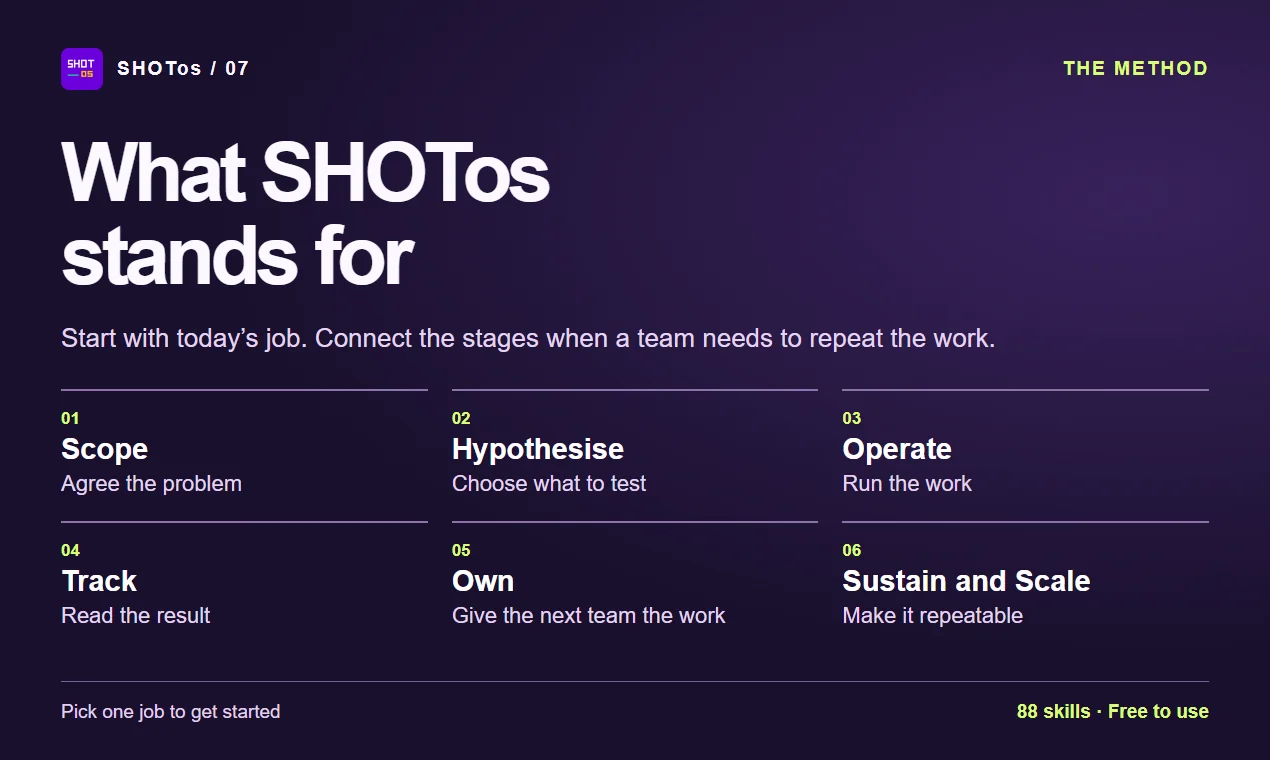
We wrote ours down and published it as SHOTos, a free set of skills for the AI assistant you already use. Here is the method behind it.
Start with the work in front of you
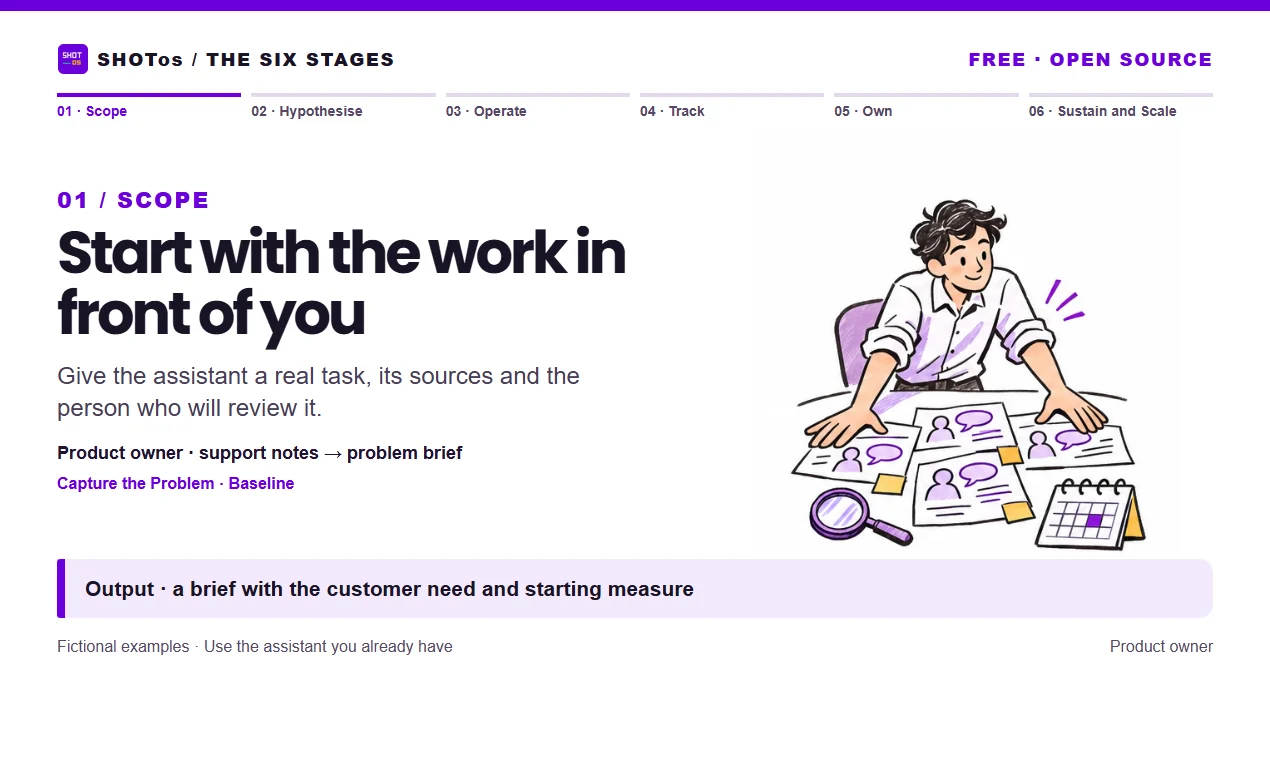
Skip the AI strategy for now. Pick one real job that takes too long, gather the sources it needs and name the person who will review the result.
A founder might turn twenty customer interview notes into a one-page problem brief. A sales lead might tailor a proposal to a new buyer. A product manager might turn a month of support tickets into a test plan, and a marketing manager might draft a campaign page with one clear action for the visitor. Each job is small and uses real sources. Someone who knows the work reads what comes back.
Agree what better looks like
Before the assistant starts, write down what better looks like and how you will know. "The brief names the three problems customers raised most, each with a quote" can be checked. "A good brief" cannot. When the result comes back, you compare it with the check you agreed rather than with a vague sense of whether it feels right.
Ask for proof, not confidence
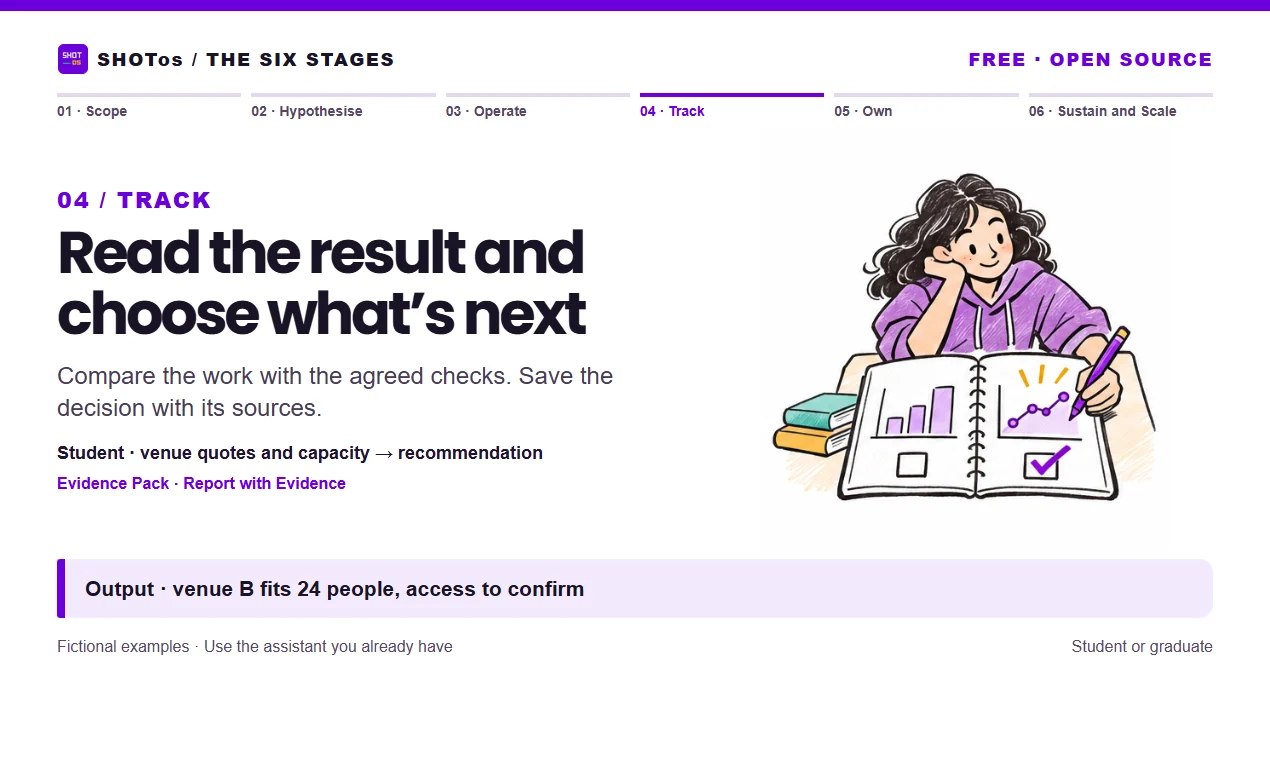
This is the rule that does the most work. When an assistant says it has done something, it should show where. "The proposal is ready" needs the file. "The email is sent" needs the record of sending. Anything it could not check is labelled as unchecked instead of being smoothed over.
A person stays in charge of anything that leaves the building. The assistant drafts, and someone with the authority to do so sends, pays or deletes. That boundary is what lets a team trust the drafts enough to use them.
Pilot three before you run three hundred
Once a job works, it is tempting to run it across every customer or every file at once. Run three first, including the least typical one, and have the owner accept them. Then run the rest in batches against the same checks.
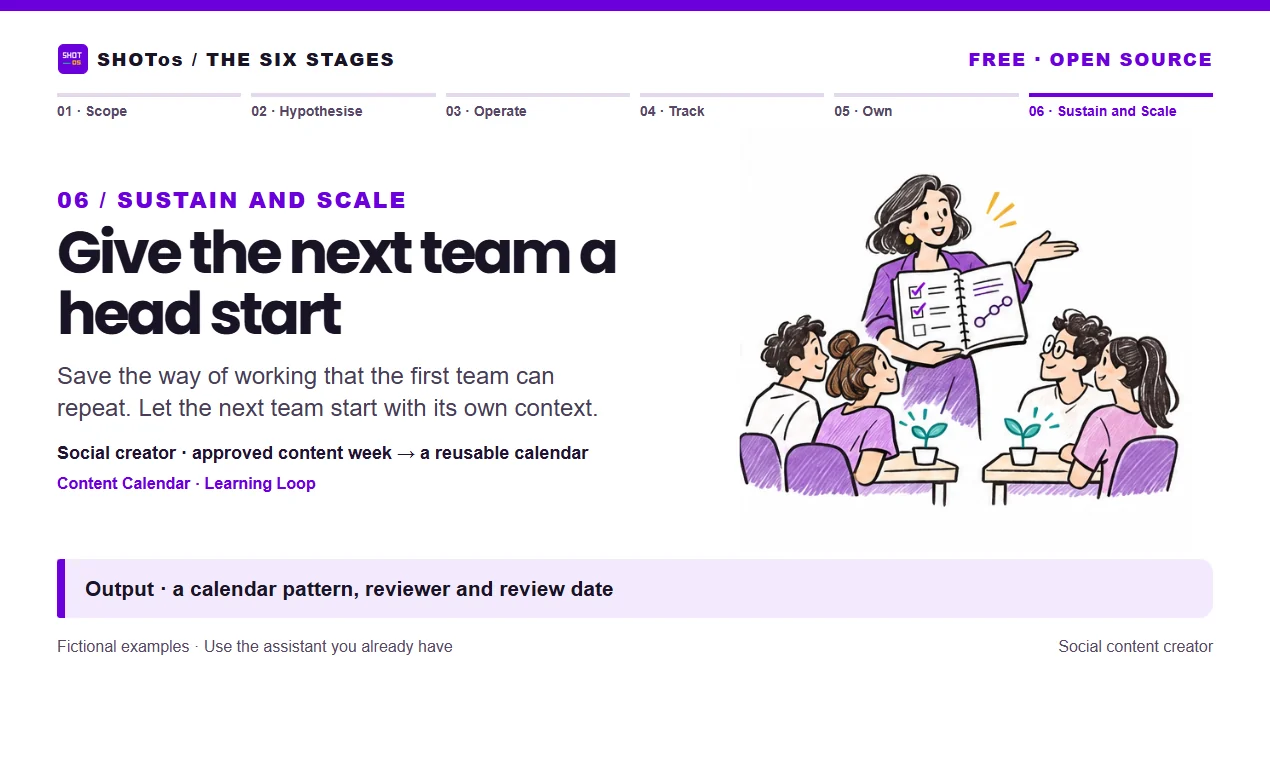
When a job is going to repeat, save the way of working with it: the sources, the checks, the reviewer and what the first run taught you. The next person or team starts from there with their own context, instead of from a blank chat.
Startups, enterprises and the teams in between
In a startup, the gain is that a small team can cover the work of a larger one. Proposals, research, follow-ups and admin get done to a standard the founder can check in minutes.
In a larger organisation, the gain is consistency. A function can agree one way of doing a job, review the results against the same checks and show where each piece of work came from. That matters when the work feeds a decision or reaches a customer.
For any single function, the steps stay the same. Scope the job, agree what better looks like, run it, read the result, give ownership to the person who will keep it, then make it repeatable. SHOTos calls these Scope, Hypothesise, Operate, Track, Own, and Sustain and Scale.
Try one job
SHOTos is free and open source. It has 88 skills for everyday work, from proposals and campaign plans to decision briefs and handoffs, and it works in ChatGPT, Claude, Codex or Claude Code. It does not connect to your systems by itself; it works with what you give it, and drafts stay drafts until a person sends them.
Pick your role on the start-by-role guide. There are routes for business leaders, founders, commercial leads, product managers, graduates, marketing managers and social content creators, and each one starts with a single skill to try. If you want one place to begin, download the Decision Brief skill and follow the chat setup guide.
Start with one job this week. Check what comes back. If it saves you time and you trust the result, do it again next week, and then hand it to someone else.
Read more from SHOT.