
The Engine Room · The Kit
Our secret sauce is on GitHub
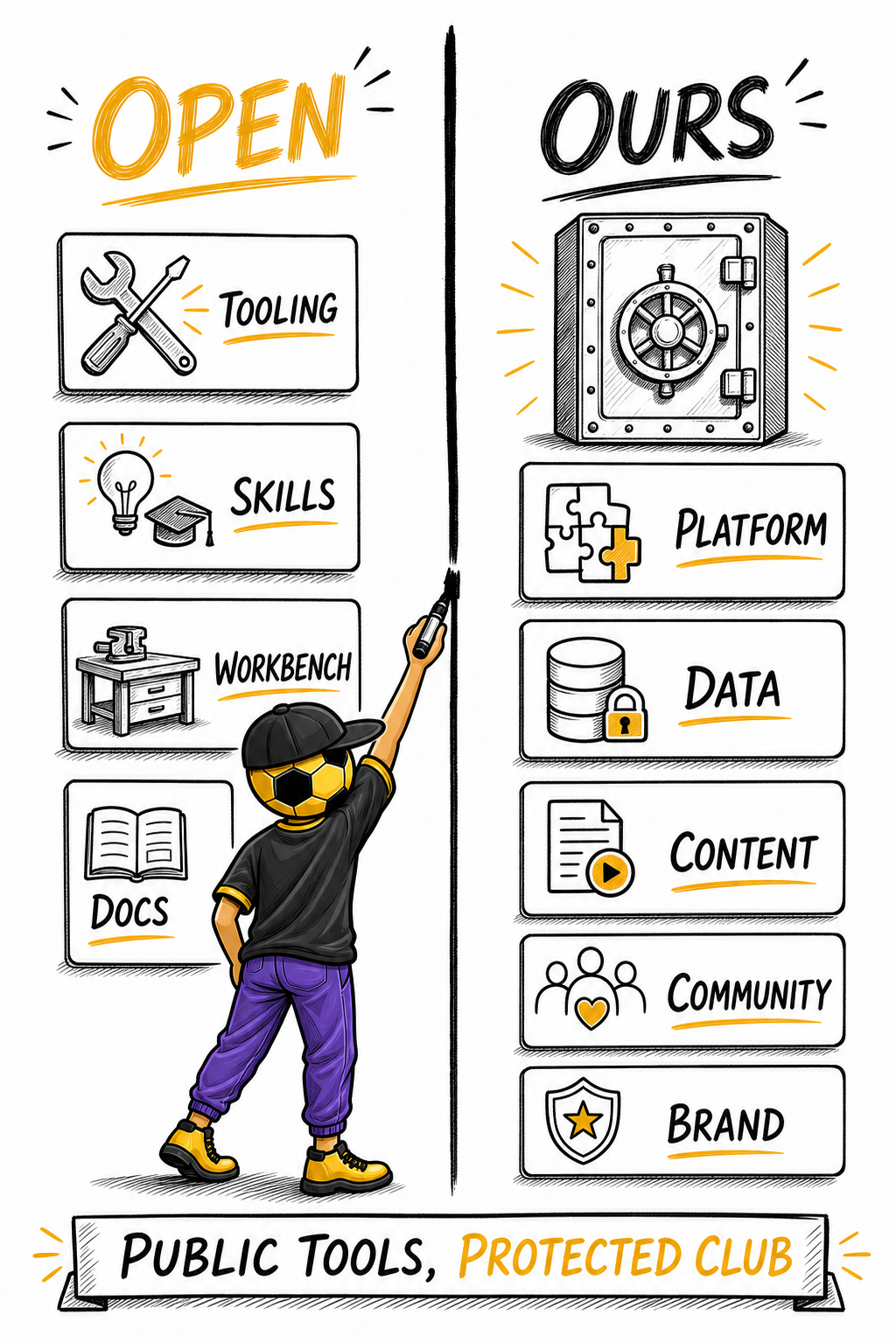
SHOT can publish the workbench because the product, data, content, community and brand remain protected.
The Team Talk (Alex's version)
Imagine a top club that publishes its full training manual. Every drill, every session plan, every piece of kit, free for any rival to download. Sounds like giving the game away. It is not, and here is why: the manual is not what wins on Saturday. The players are. The seasons of practice are. The supporters are.
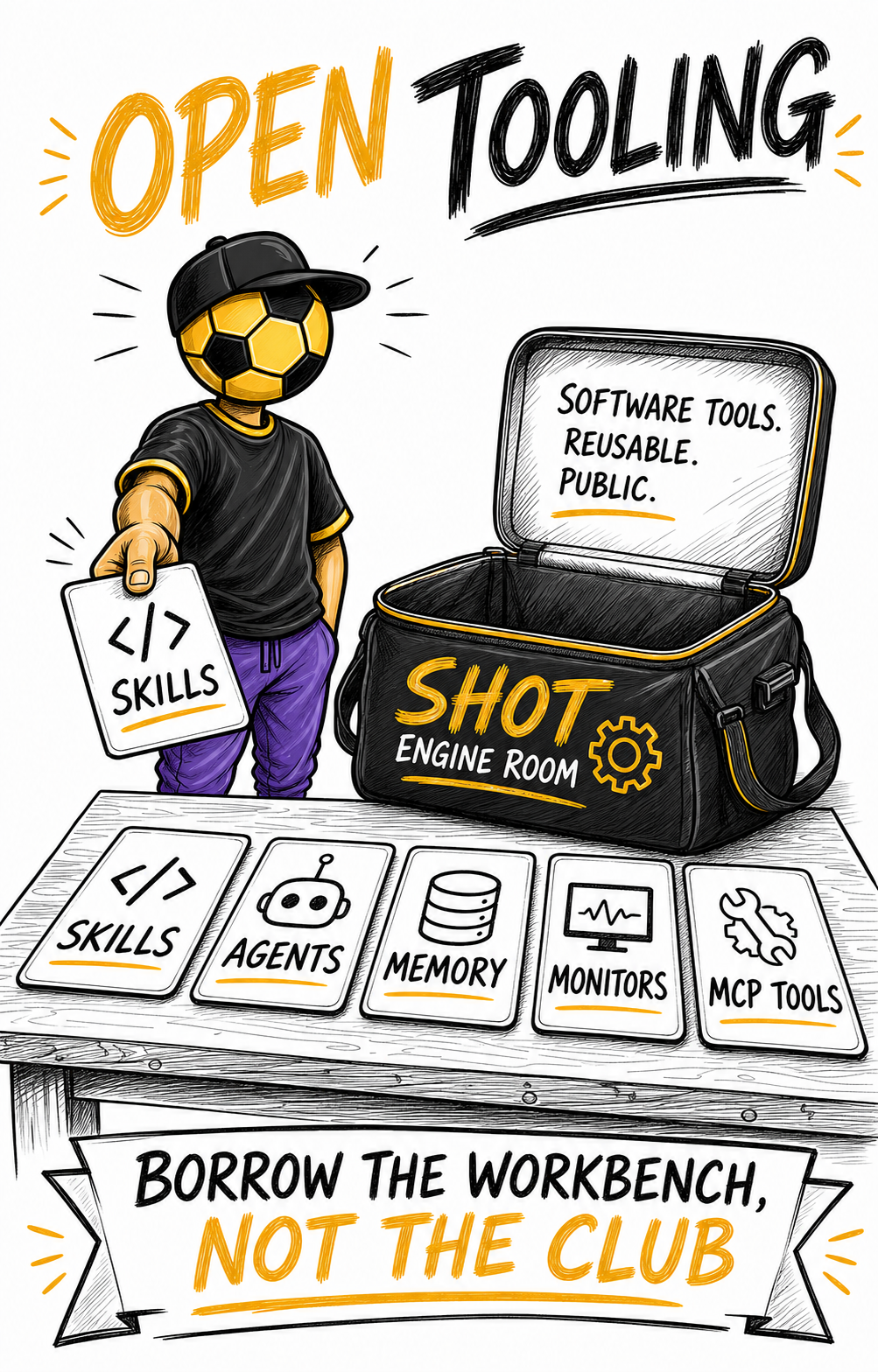
That is what we do with our tools. The software we use to build SHOT, the rigs and workbenches our engineers work with every day, is published on GitHub (a public website where programmers share code) for anyone to take. The biggest of these tools ships with 91 ready-made skills, and you can install the lot without asking our permission.
What we never publish is the club itself: the SHOT platform, the data families trust us with, and the community around it. Those are locked down as tightly as ever, and publishing our toolbox does not loosen a single bolt on them.
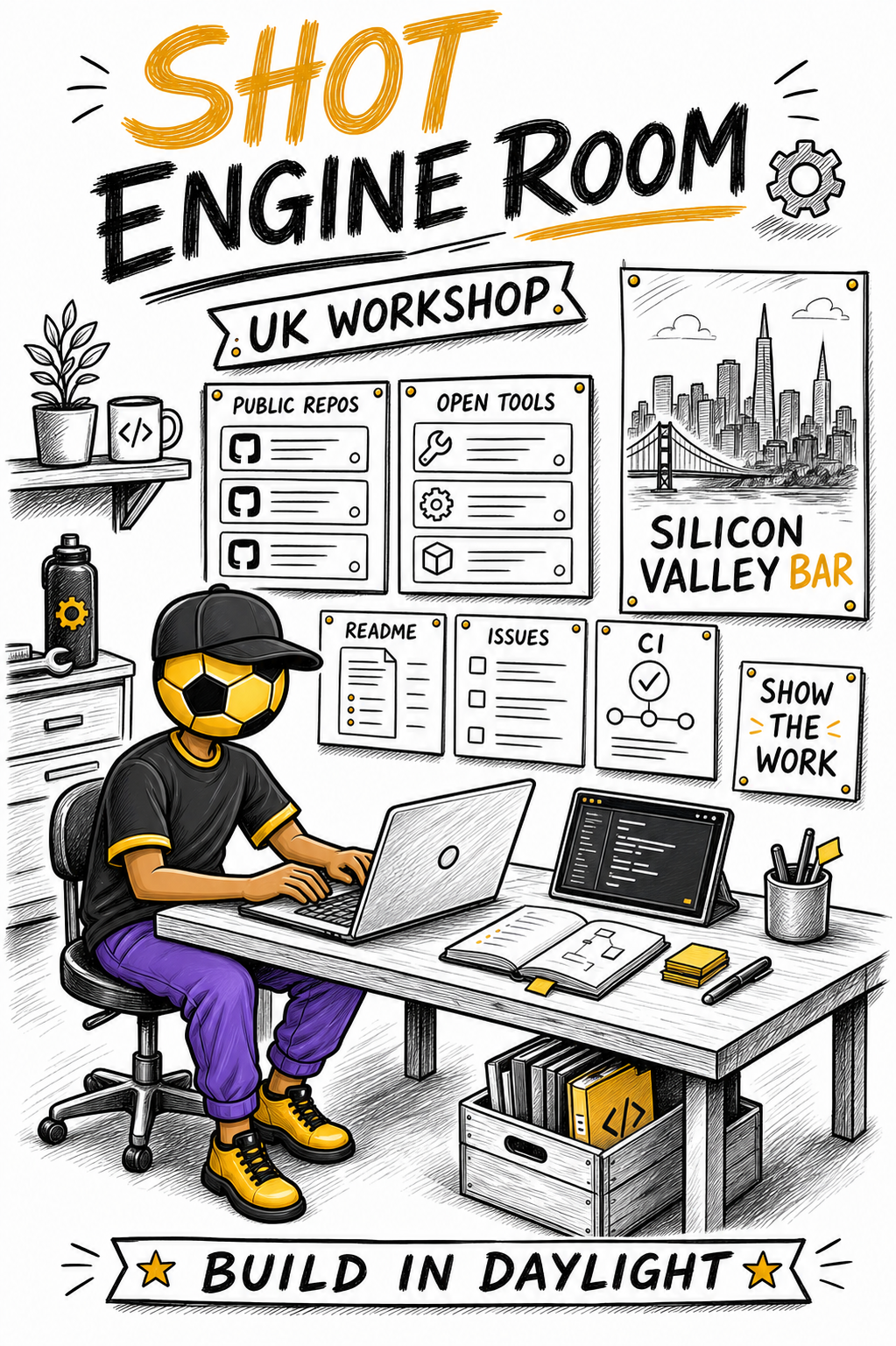
Why share at all? Because a company that shows its working is easier to trust than one that hides it, and trust is the whole business when your platform serves young players. For the kid on the far pitch, it means the people building their app work in daylight.
The Deep Dive
Search my GitHub profile and you will find the tools SHOT is built with, licensed MIT, free to fork. This post is the honest inventory: what is open, what is closed, and why the split costs us nothing that matters.
The catalogue
The flagship is agents-in-a-box (ainb): a Rust terminal application for managing fleets of AI coding agents. The numbers, from its own README: 115 Rust modules, 91 portable skills, 37 specialised agents, deployable to 9 different AI coding tools (Claude Code, Codex, Gemini CLI, Copilot, Cursor, Amazon Q, Cline, Roo, Clawdhub). Each coding session gets its own git worktree and tmux session, so agents cannot contaminate each other's work. A two-tier memory system (GraphRAG plus semantic search over markdown notes) means lessons learned in one session are retrievable in the next. The codebase forbids unsafe Rust outright and runs clippy's pedantic and nursery lint groups in CI. It sits at 18 stars on GitHub as of writing.
One thing to state precisely, because precision is the point of this blog: agents-in-a-box is my personal open source project, started before it became SHOT's daily workbench. SHOT does not own it. SHOT uses it, contributes to it, and benefits from it, and that is the whole relationship. If SHOT vanished tomorrow, ainb would keep existing. If I vanished tomorrow, SHOT would keep a fork. Nobody is hostage to anybody.
Around it sits a small constellation, all public:
- ainb-toolkit: the canonical home of the 91 skills and 37 agents, consumed by ainb as a pinned external source.
- ainb-reflect-memory: the long-term memory engine (GraphRAG plus hybrid recall), extracted into its own repo.
- cerebro: a local-first, token-minimal daily tech-intelligence pipeline.
- abtop: real-time monitoring of Claude Code and Codex sessions, tokens, and context windows.
- qstatus: usage monitoring for Amazon Q Developer.
- promptregistry-mcp and todoist-mcp: small MCP servers (the protocol that lets AI assistants call external tools).
- Plus a long tail: a Homebrew tap, dotfiles, a voice-to-text app for macOS, experiments in messaging-agent integration.
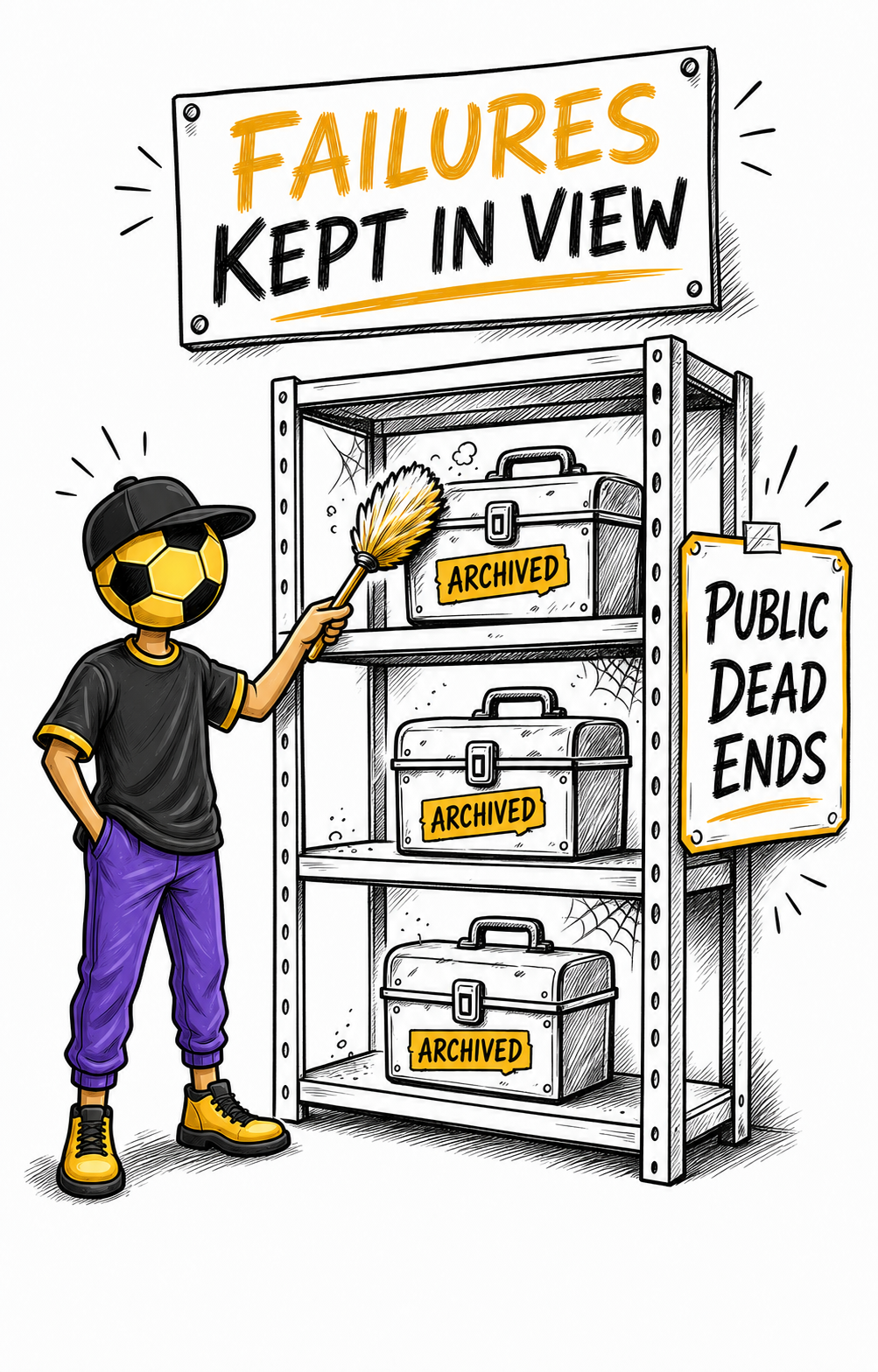
The profile shows 367 repositories in total. Most are experiments. At least three are archived in public view: a deprecated Homebrew tap, a knowledge-base project superseded by ainb-reflect-memory, and a fleet-hooks repo that moved home. We leave the corpses visible. A profile with no dead ends is a profile that has never tried anything.
What stays closed
The SHOT platform itself: every line of product code, the data model, the infrastructure. The data, above everything: SHOT holds information about young athletes, and nothing that touches it, describes its shape, or maps how it is protected will ever appear in a public repo. The PERFORM content library, hundreds of coaching frameworks that took real money and real domain review to build. The community, the ambassador network, the brand. The line is simple to draw because the two sides are different kinds of thing: the open half is tooling, the closed half is the product and the people.
Why this gives nothing away
The obvious objection: if the tools are public and the methods are documented on this blog, what stops a competitor cloning SHOT? Answer: try it. Everything you could clone from GitHub is the part that was never the advantage.
Our edge is three things, none of them downloadable. First, compounding operational skill: a small product-engineering team that has run agent fleets in production long enough to know which parts to automate, which parts to gate, and which parts to keep human-owned. The tooling is the residue of that practice, not the practice itself; handing you ainb no more makes you us than handing you a squad's training manual makes you the squad. Second, the product's accumulated data and content, built and verified over years. Third, the community and the brand, which are earned per family, per club, per season, and cannot be forked.
This is not a novel bet. Netflix open-sourced Chaos Monkey, the tool that randomly kills its own production servers, in 2012, along with a stream of other infrastructure, and wrote publicly about how it all worked. None of it helped Blockbuster. What it did was build the engineering reputation that pulled in the people and the trust that built the company. The tools were the advert; the operating discipline was the product. Silicon Valley's strongest companies publish their tooling precisely because they know the tooling was never where the advantage lived.
The scars: what openness actually costs
Honesty section, as ever. Open source is not free to give. Maintaining ainb means CI across macOS and Linux, a release pipeline, a Homebrew tap that newer Homebrew versions now gate behind an explicit trust step, and issue reports from strangers whose setups we have never seen. Windows users are told plainly: unsupported, use WSL2, because the honest answer beats a broken promise. And 18 stars is not a movement; we are not pretending this catalogue has traction it does not have. The value to us is not fame, it is discipline: code you publish under your own name gets written to a standard that private code quietly escapes, and every README becomes documentation your own team actually keeps current.
The ambition, stated plainly
SHOT is a UK company with a small product-engineering core building for grassroots sport. The bar we measure against is not local convention, it is the best of Silicon Valley practice: publish the tooling, document the way of working with receipts, keep the product and the data guarded, and let the openness itself do the recruiting and the trust-building. The secret sauce was never a hidden algorithm. It is the operating system around the models, practised daily, in the open, where you can check our working.
Next in The Engine Room: the quarterly Fleet Report, receipts included.
Read more from SHOT.