
Jobs this piece does
- Show what the old clubhouse did
- Name the missing third place
- Link belonging to product purpose
The clubhouse I grew up in
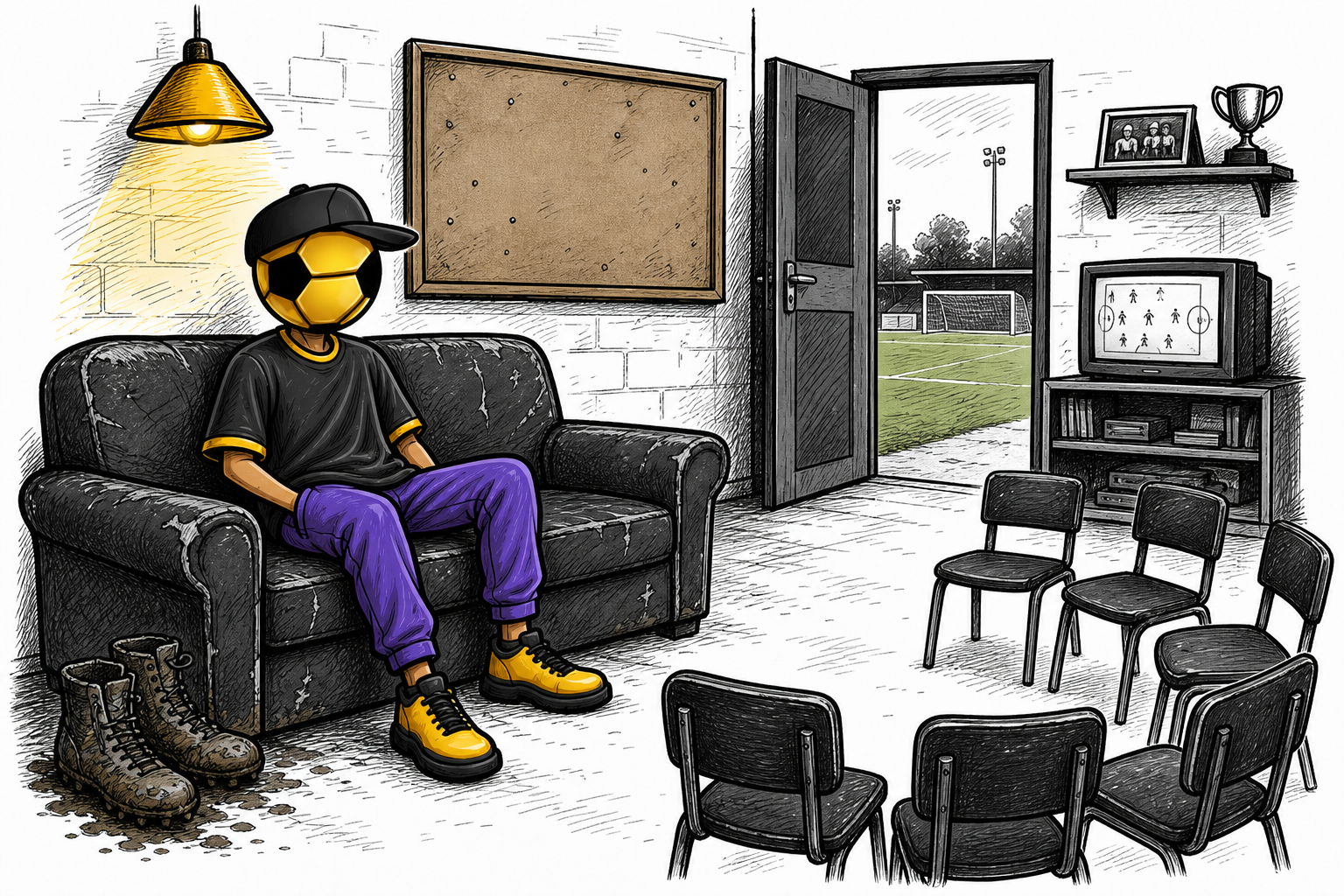
I can still walk through it in my head. You came in past the coach, who always had thirty seconds for you: how was school, how is the ankle, big one on Saturday. There were sofas that had seen better decades. A TV in the corner with the live scores on, and someone always arguing with it. Out the back, the older lads playing cricket, and if you hung around long enough they would let you field.
Your parents did not drop you and drive off. They stayed. They knew the other parents, the coach knew them, everyone knew whose kid was whose. Half the real coaching happened in that thirty seconds on the way in, not on the pitch.
We lived our lives in that clubhouse. It was not a facility. It was the middle of the community, and nobody had to call it that because it just was.
Then, quietly, over about two decades, places like it died. Not dramatically. A bar that stopped being staffed. A roof that did not get fixed. A generation of volunteers who retired without replacements. Every town and village used to have one, and then they vanished, replaced by franchises, feeds and filtered algorithms.
Here is what I think we actually lost, because it was never really about the building.
We lost the thirty seconds with the coach on the way in. The adult who was not your parent and not your teacher, who noticed you week after week. Ask anyone who works with struggling teenagers what the single most protective thing in a young life is, and a trusted adult who shows up consistently is at or near the top of every list.
We lost the room where generations mixed. The older lads at cricket were not a youth programme. They were just there, and you could watch what being seventeen looked like from the safety of being eleven. No feed shows you that. A feed shows you what being seventeen looks like after four takes and a filter.
We lost the place parents stayed. The touchline drop-off culture we have now, where youth sport is childcare with bibs, would have been unrecognisable in that room.
And we lost the noticeboard. The low-stakes, ambient information of a community: who needs a lift, who is running the tournament, whose boots are for sale. That layer did not move online. It just went missing.
The invoice for all of this arrived, we just do not itemise it honestly. The government's Community Life Survey for 2023/24 puts 7% of adults in England, around 3.1 million people, as lonely often or always. And the ONS has found for years that the loneliest age group is not the elderly. It is 16 to 24 year olds, the exact people the clubhouse used to hold, at roughly three times the rate of the over-65s. Meanwhile Sport England and Sheffield Hallam value community sport and physical activity in England at £122.9 billion a year in social value (2023/24). We can price what sport generates. We have never priced what the clubhouse held together.
I do not think you can rebuild the 1990s, and I am not nostalgic for the carpet. Some of it needed to die. But the functions it performed, belonging, visibility, mixed generations, adults who notice, those did not stop being needed. They just stopped being provided. The demand went somewhere, and where it went was the feed, which performs none of those functions and monetises the gap.
This is the belief underneath everything we build: belonging is infrastructure. Not a nice-to-have, not a vibe. Infrastructure, like the pitch and the floodlights. When a community loses its third place, the loneliness numbers, the drop-out numbers and the trouble numbers are not separate stories. They are the same story, invoiced separately.
I am writing a full paper on this, called The Clubhouse: what sport lost when the building died and what it would take to build the function back, honestly, without pretending a screen is a sofa.
Until then, next time you are at a club that still has one, stop in the doorway for thirty seconds. That pause is the product. Everything we make is trying to be worthy of it.
The paper is coming at shotclubhouse.com.
Read more from SHOT.