
Jobs this piece does
- Show the parent-side process
- Move from paperwork to operating model
- Support the safeguarding audit honestly
The wrong side of safeguarding
I usually write here as a coach. This one I'm writing as a parent, because before I ever ran a football session I sat on the other side of a safeguarding process, in swimming, and it changed how I think about all of this.
I'm not going to give details. No club, no names, nothing that could point to any child, including mine. The specifics aren't the point and they're not mine to share. What I can talk about is the process, because the process is what failed.
Here's what it looked like from the parent's side of the table.
We raised a concern, the way the posters in every leisure centre foyer tell you to. What happened next depended entirely on who happened to pick it up. One person treated it seriously and knew the steps. Another clearly didn't know there were steps. We were asked to repeat the same account to different people who hadn't spoken to each other. Timelines were vague. Nobody could tell us where things stood, or who owned it, or what happened next. At one point I'm fairly sure the answer to "where is this now?" was, honestly, a drawer.
And the thing I keep coming back to: nobody in that chain was a villain. They were volunteers. Decent people who'd done a course once, years before, and were now handling one of the most sensitive situations a club can face, in their spare time, with no rehearsal and no backup. The system had given them a certificate and a poster and called that a safeguarding structure.
That's the uncomfortable truth about safeguarding in grassroots sport. We've built it as paperwork. A module you complete, a policy you file, a designated officer whose name is on a laminated sheet. It exists in a drawer, and it comes out of the drawer only on the worst day of somebody's year, handled by whoever is nearest, at whatever standard their half-remembered training left them.
The training itself is thin and getting thinner in places. In the US, the Aspen Institute's Project Play State of Play 2025 report found the share of youth coaches with recent safety training fell from 34 per cent to 26 per cent between 2019 and 2024. That's American data, so flag it as such, but I'd be amazed if the direction of travel here were much different: fewer volunteers, stretched further, refreshing their training less.
Then I became a coach myself, and saw the same drawer from the inside. I also saw how the everyday tools make it worse. The group apps most clubs run on have no real concept of safeguarding at all. I've made this point before and I'll keep making it: I could set one of those apps up as a sixteen-year-old and direct message a load of twelve-year-olds, and nothing in the tool would blink.
So here's what I now believe, having sat on both sides.
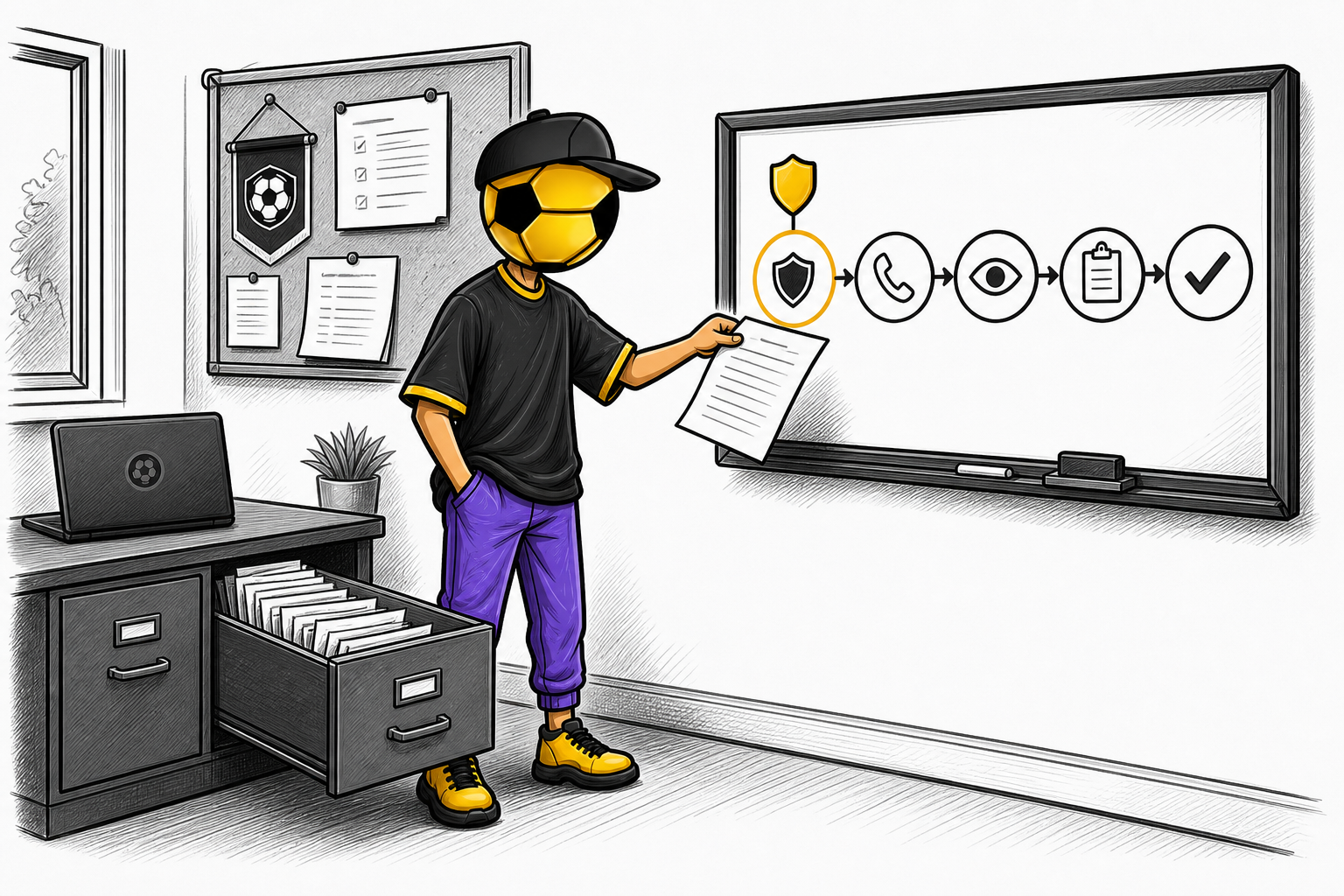
Safeguarding can't be a document. It has to be built into how a club actually operates, day to day, so that the safe way is the default way. Communication that's visible by design, not private by default. Clear ownership when a concern comes in, so no parent ever has to guess who's holding it. A process that works the same whichever volunteer answers the phone, because it's the process carrying the weight, not the individual's memory of a course.
None of that is exotic. Schools broadly work this way. Grassroots sport mostly doesn't, and it's minding our children every weekend.
If you help run a club, in any sport, here's a small test. Ask yourself: if a parent raised a concern tomorrow, does what happens next depend on the system, or on who's on duty? If the honest answer is "who's on duty", the policy in the drawer isn't protecting anyone. It's just paper.
We got through our experience. Plenty of families in that position walk away from the sport entirely, and having lived it, I don't blame a single one of them.
Read more from SHOT.