
Jobs this piece does
- Help parents explain the ban/feed dilemma
- Frame safe sport spaces
- Connect Locked Out to a human moment
Unlock my Instagram, Dad.
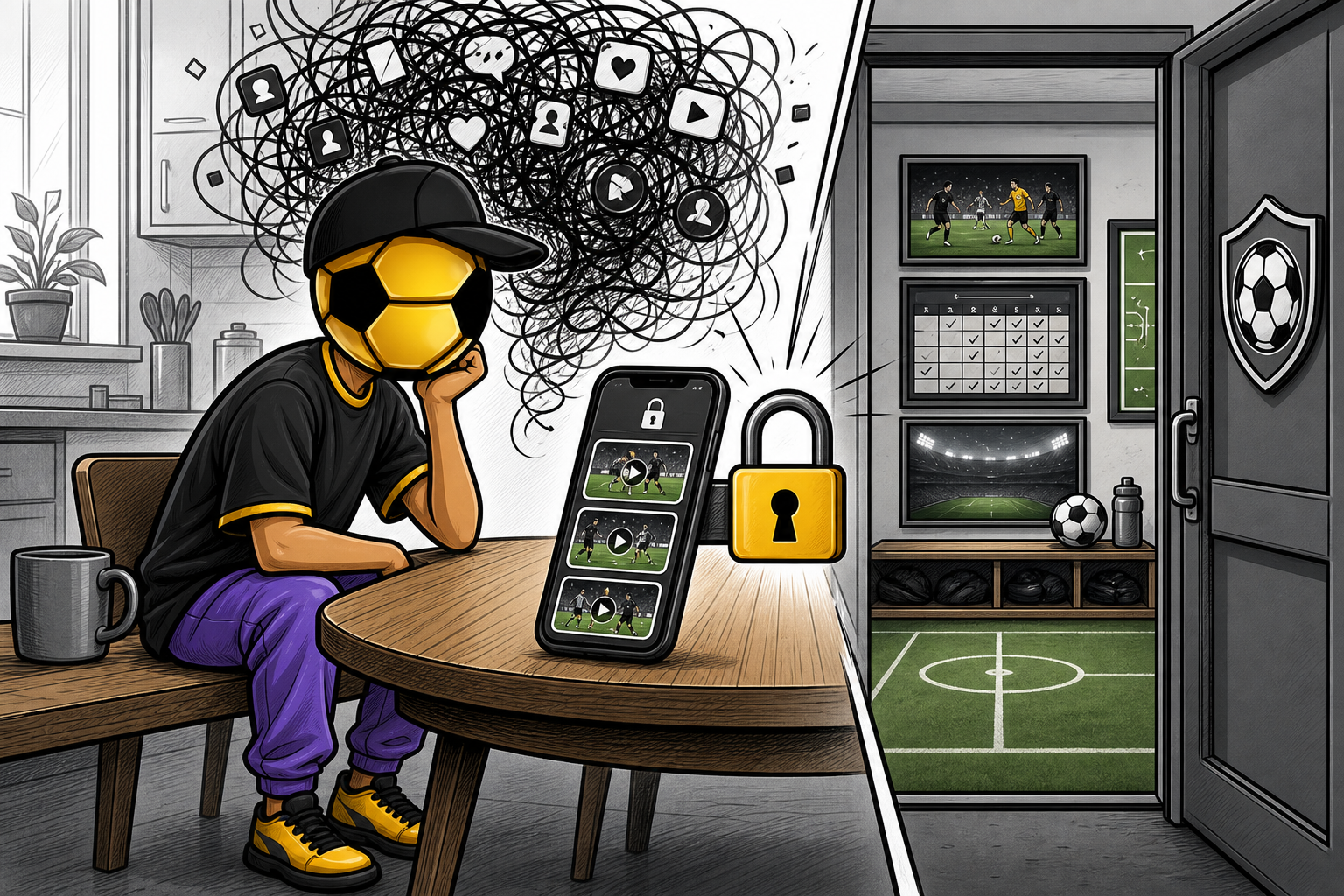
My daughter asked me that at the kitchen table last week. She is a teenager. She did not want to post. She did not want to message anyone. She wanted to watch football.
I locked that account. That should be an easy thing for a dad to do. It is not, because I do the opposite for a living. SHOT have built a platform to put sport in front of everyone, to pull them in, to help them nurture a passion for sport. So I took the thing I live every day and I took it off my own child.
Here is the problem. The clips she wants are the clips that keep kids in love with the game.
The feed she has to open to reach them is the one I do not want her near.
Both are true. We are not being honest about that, as parents, as a country, or as an industry.
The bans are coming either way. Australia's under-16 ban went live in December 2025. The eSafety Commissioner reported around 4.7 million under-16 accounts gone within days. The UK announced its own in June 2026, in force from spring 2027. France, Denmark and Norway are heading the same way.
I understand why. I feel it in my own home. The harms are real. Any parent who has watched a child vanish into a feed knows exactly what the lawmakers are reaching for.
But the early evidence from Australia should stop everyone in their tracks. Polling in March 2026 by the Molly Rose Foundation, a campaigning charity, found 61% of 12 to 15 year olds who used to have accounts still had access. 21% said they were spending more time on less regulated platforms. UNICEF warned before any of this passed that bans can backfire, and that for isolated children social media can be a lifeline. And nobody has yet checked whether the ban actually made children's lives better. That study is running now. Nobody has the answer, including the people who wrote the law.
Now the part almost nobody inside sport is saying out loud. The Australian regulator's own guidance says clubs can still post content featuring under-16s. The under-16s just cannot receive it. Fixtures. Results. Highlights. The video of their own goal, posted into a room they are no longer allowed into.
Put that against how kids actually get their sport. It comes through social first.
Over 90% of Gen Z fans get sport through social platforms, clips first, athletes first (Immersiv analysis, so directional, not gospel). For a 13-year-old the highlights are not an extra on top of the sport. They are how the sport reaches her at all.
So the ban answers the harm and cuts the thing that keeps a kid tied to the game. The clips. The role models. The team news. The club around her. We fixed the poison and turned off the water.
The mistake is thinking there are only two doors. Ban or feed. Lock the phone or hand her to the algorithm.
There is a third, and it is not complicated. Spaces built safe by design instead of banned by default. Verified identity, so everyone in the room is who they say they are. No direct messages. Not as a parental setting, as architecture. You cannot switch on a thing that does not exist. Age tiers built in from day one, not bolted on after a scandal. And the sport still flows through all of it. The highlights, the fixtures, her development, her own goal.
The technology is not the blocker. The Australian government's own age assurance trial reported in September 2025 that checking age online can be done privately, efficiently and effectively. Verification works. The question is what we verify kids into. A ban verifies them into nothing.
That is what we are building. I will make the full case properly in a paper called Locked Out.
For now, her Instagram stays locked. But she should not have to give up her passion for football to be safe. I do not accept that trade.
Locked Out lands soon at shotclubhouse.com.
Read more from SHOT.